PG vs VG: Technical Comparison of E-Liquid Base Ratios
Technical Review: This article was reviewed and updated in February 2026 by the EirHorse Engineering Team to reflect current technical standards and the regulatory context in Ireland.
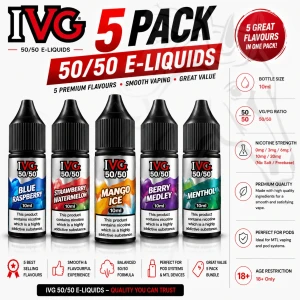
PG and VG ratios are a core engineering parameter of e-liquids. They define how a liquid behaves inside a coil, how efficiently it moves through cotton, and how it performs at different power and temperature settings. This article explains the functional differences between propylene glycol (PG) and vegetable glycerin (VG) using measurable, device-focused characteristics.
Definition: PG/VG ratio is the proportional composition of propylene glycol and vegetable glycerin used as the base of an e-liquid, directly influencing viscosity, wicking behaviour, vapour density, and hardware compatibility.
Key takeaways
- PG and VG serve different engineering roles in e-liquid formulation.
- Higher PG supports faster wicking and efficient low-power operation.
- Higher VG increases viscosity and vapour density but requires suitable hardware.
- Coil design and resistance must match the chosen PG/VG ratio.
- Mismatch between liquid viscosity and coil geometry reduces performance.
Propylene Glycol (PG): engineering characteristics
Propylene glycol is a low-viscosity carrier fluid. Its thin structure allows rapid movement through narrow cotton channels and small juice ports, making it suitable for low-power devices, restricted airflow systems, and higher-resistance coils.
Vegetable Glycerin (VG): engineering characteristics
Vegetable glycerin has significantly higher viscosity and requires more thermal energy to vaporise efficiently. It is typically used in hardware with wider wicking channels, larger airflow paths, and lower-resistance coils.
PG vs VG: physical properties matrix
Wicking process: viscosity vs coil geometry
The relationship between liquid viscosity and coil design is critical. High-VG liquids can physically restrict liquid flow in coils designed for thinner bases.
Low viscosity (PG-heavy):
Tank → ││ small ports ││ → Cotton → Coil (stable feed)
High viscosity (VG-heavy):
Tank → │ small ports │ → Cotton ✖ → Coil (restricted feed)
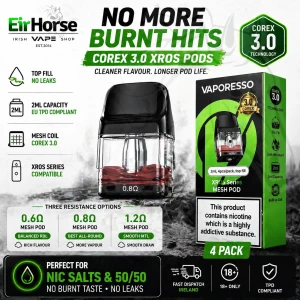
In MTL and pod-style coils with narrow juice inlets, thick VG-dominant liquids may not replenish the cotton quickly enough under continuous use.
Device compatibility matrix
Temperature control (TC) considerations
VG has a higher boiling and vaporisation temperature than PG. In temperature control modes, especially when using stainless steel or nickel-compatible coils, VG-dominant liquids may require adjusted temperature limits to maintain stable vapour production without dry wicking conditions.
Hardware Compatibility FAQ
Does PG or VG affect coil longevity?
Yes. Liquids that do not match the coil’s wicking capacity can cause uneven saturation, which accelerates cotton degradation.
Can high-VG liquids be used in pod systems?
Only if the pod and coil are designed with sufficient liquid inlet size and airflow. Many pod systems are optimised for lower-viscosity liquids.
Does PG/VG ratio matter in temperature control mode?
Yes. VG-dominant liquids typically require higher temperature thresholds due to increased thermal demand.
Ireland-specific context
This content is intended for adult users (18+) in Ireland. It describes technical behaviour of e-liquid base ratios and device interaction. It does not provide medical advice, health claims, or cessation guidance.
Intent discloser
This article is technical documentation focused on hardware compatibility and liquid behaviour. It avoids health-related interpretations and marketing claims.