Technical Review: This article was originally published as a cost-focused discussion and was fully updated on 9 February 2026 to reflect current Irish excise duty (EPT) rules, market conditions, and regulated system economics.
Vaping Economics in Ireland (2026): Cost Efficiency Under Excise Rules
In 2026, discussions about “saving money” in vaping no longer relate to low purchase prices or promotional offers. Following the introduction of the Irish E-Liquid Products Tax (EPT), cost outcomes are determined by system architecture, liquid volume efficiency, and long-term operating structure rather than upfront cost alone.
Definition
Cost efficiency in vaping refers exclusively to the optimisation of operating costs within regulated vaping systems under Irish excise rules. This analysis does not compare vaping to other consumer behaviours or products and does not address health-related outcomes.
Key takeaways
- In Ireland, excise duty is applied per millilitre of e-liquid, regardless of system type.
- Cost efficiency depends on how excise is distributed across liquid volume.
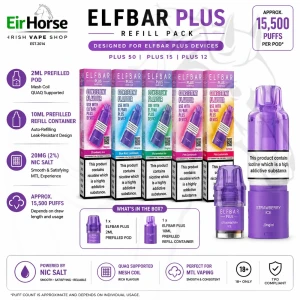
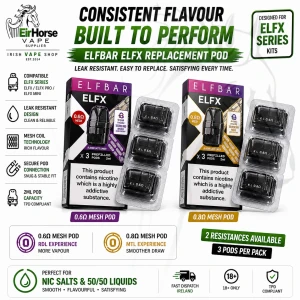
- Open (refillable) systems generally spread excise across larger volumes.
- Closed and disposable systems concentrate excise into smaller units.
- Long-term cost outcomes are structural, not promotional.
Excise Duty (EPT) as the Primary Cost Driver
Since the introduction of EPT, every millilitre of e-liquid sold in Ireland carries a fixed tax component. This means that the financial performance of a vaping setup is shaped less by brand pricing and more by how efficiently a system manages taxed liquid over time.
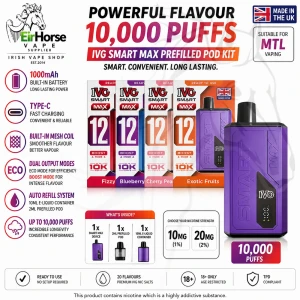
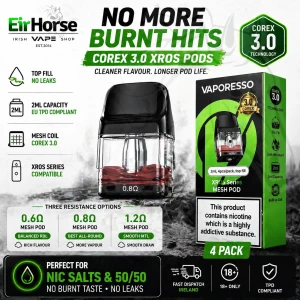
Systems that require frequent replacement of pre-filled units tend to concentrate excise into smaller consumption cycles. Refillable platforms distribute the same excise across larger liquid volumes, reducing the relative cost per unit of use.
Official reference: Revenue.ie – E-Liquid Products Tax (EPT)
System Architecture and Cost Distribution
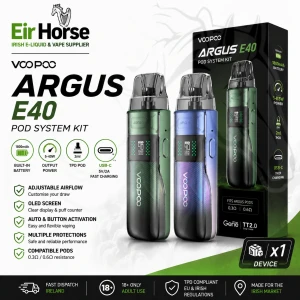
From an economic perspective, the critical distinction is not device price but liquid delivery architecture. Different system types interact with excise rules in different ways.
| System type (2026) | Liquid format | Excise distribution | Financial efficiency |
|---|---|---|---|
| Closed systems | Pre-filled cartridges | Embedded per unit | Lower relative efficiency |
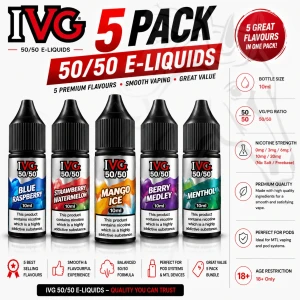
| Open systems | Bottled e-liquid | Spread across volume | Higher relative efficiency |
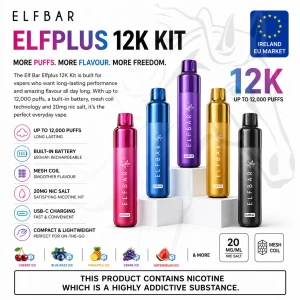
| Disposable devices (legacy) | Integrated liquid units | Fully concentrated | Lowest efficiency (phasing out) |
Long-Term Operating Cost vs Upfront Hardware Price
In a post-EPT environment, device purchase price has limited relevance to total cost of ownership. Even higher-priced regulated devices can achieve lower long-term operating costs when paired with refillable systems that manage excise exposure efficiently.
This shifts decision-making from “cheap devices” to cost-per-ml analysis over time. Hardware longevity, coil lifespan, and refill capacity become more relevant than initial purchase cost.
Ireland-Specific Context (2026)
All nicotine-related vaping products in Ireland are restricted to adults aged 18 and over. Retail availability, pricing structures, and system design are shaped by excise duty enforcement, product notification requirements, and environmental obligations. Economic comparisons should therefore be understood strictly within this regulated framework.
FAQ – Vaping Cost Efficiency in Ireland
Does excise duty apply equally to all vaping systems?
Yes. Excise duty is applied per millilitre of e-liquid regardless of system type. The difference lies in how that cost is distributed across usage.
Why do refillable systems appear more cost-efficient?
Refillable systems distribute excise across larger liquid volumes, reducing the relative cost per unit of use over time.
Is this a comparison with other consumer products?
No. This analysis focuses exclusively on cost optimisation within regulated vaping systems under Irish excise rules.
Intent Discloser: This content provides technical and economic analysis for adult users in Ireland. It does not include medical advice, health claims, or behavioural comparisons.