Categories
Precision Liquid Delivery Systems for Consistent Vapour Performance
Vape tanks (also referred to as clearomizers or sub-ohm tanks) are designed to store e-liquid and deliver it efficiently to the coil for stable vapour production and flavour consistency.
Different tank designs support various vaping styles — from MTL (mouth-to-lung) setups using higher PG liquids to sub-ohm DL systems optimised for high VG performance and increased airflow.
Modern tanks focus on leak resistance, airflow control and coil compatibility, ensuring predictable performance across a wide range of devices.
Tanks
Innokin T20S Tank

Availability:: large
Shipment date:: dispatch the same working day for orders placed by 3pm
Aspire Nautilus 2 Tank

Availability:: large
Shipment date:: dispatch the same working day for orders placed by 3pm
Aspire K3 Tank

Availability:: running out
Shipment date:: dispatch the same working day for orders placed by 3pm
Aspire Nautilus 3 Tank

Availability:: running out
Shipment date:: dispatch the same working day for orders placed by 3pm
VooPoo Maat Pod Tank

Availability:: running out
Shipment date:: dispatch the same working day for orders placed by 3pm
VooPoo TPP-X Pod Tank

Availability:: running out
Shipment date:: dispatch the same working day for orders placed by 3pm
VooPoo U-Force L Pod Tank

Availability:: running out
Shipment date:: dispatch the same working day for orders placed by 3pm
Tank Systems Explained – Structure, Airflow & Compatibility
Vape tanks operate as controlled liquid delivery systems, where airflow, coil structure and chamber pressure determine vapour output and flavour consistency.
---Tank Engineering & Internal Structure
Modern clearomizers are designed to regulate liquid flow while maintaining pressure balance inside the tank chamber. This prevents flooding, dry hits and inconsistent vapour output.
Technical reference: Vape Tank Engineering
---Coil Compatibility & Performance
Each tank supports a specific coil platform. Matching the correct coil ensures proper wicking, airflow alignment and thermal stability during operation.
Technical reference: What Is a Vape Coil?
---Liquid Ratio & Tank Behaviour
E-liquid viscosity directly affects tank performance. Higher VG liquids require wider wicking channels, while thinner 50/50 liquids perform better in restricted airflow systems.
Technical reference: What Are E-Liquids?
---Technical Comparison Matrix
| Tank Type | Airflow | Best Liquid | Usage Context |
|---|---|---|---|
| MTL Tanks | Restricted | 50/50 | Tight draw, nicotine salts |
| RDL Tanks | Balanced | 50/50 / 60VG | Mixed usage |
| Sub-Ohm Tanks | Open | 70VG/30PG | High vapour production |
Common Tank Performance Issues
- Leaking caused by pressure imbalance or incorrect filling
- Gurgling due to excess liquid in airflow chamber
- Dry hits from insufficient wicking or high VG mismatch
- Condensation buildup in airflow system
Regulatory Context – Ireland
Vape tanks sold in Ireland must comply with the TPD Directive, including capacity limits (2ml for nicotine-containing systems) and safety requirements for refill mechanisms.
Legal reference: TPD Directive (Ireland)
---FAQ – Vape Tanks Ireland
What is the difference between a tank and a pod?
Tanks are typically used with advanced devices and replaceable coils, while pods are more compact and often simpler in design.
Which tank is best for flavour?
MTL tanks provide more concentrated flavour, while sub-ohm tanks focus on vapour production.
Why is my vape tank leaking?
Leaking is usually caused by improper filling, worn seals or incorrect coil installation.
Can I use any e-liquid in any tank?
No. Liquid ratio must match the tank design to ensure proper wicking and performance.
How often should I change tank coils?
Typically every 1–2 weeks depending on usage and liquid composition.
€29.99
€19.99
€12.99
€14.99
€29.99
€17.99
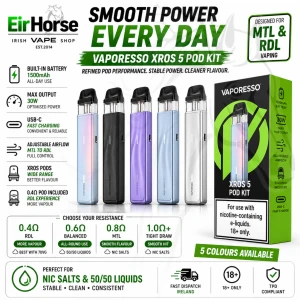
€29.99
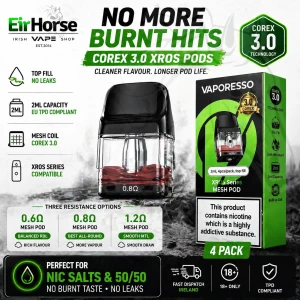
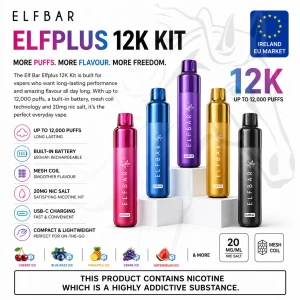
€20.99
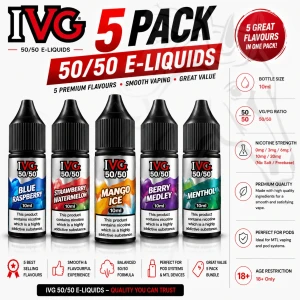
€34.99
€6.99
€44.99
€34.99
€39.99
€29.99


€6.99
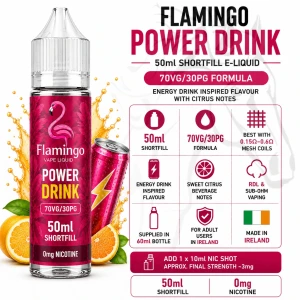
€18.99

€69.99
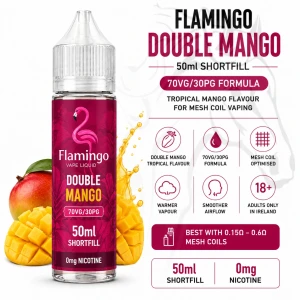
€18.99